About Vibrating Rod Point Level Switches
Vibrating Rod Point Level Switches
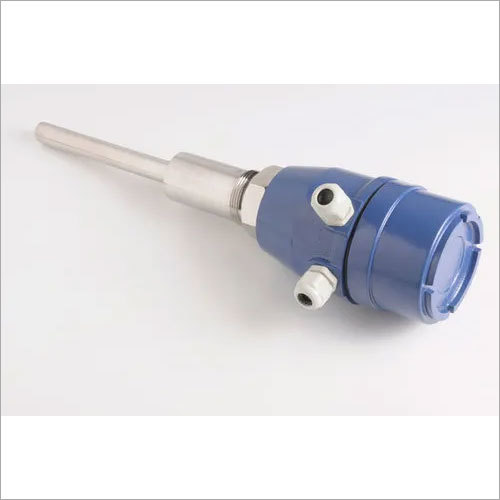
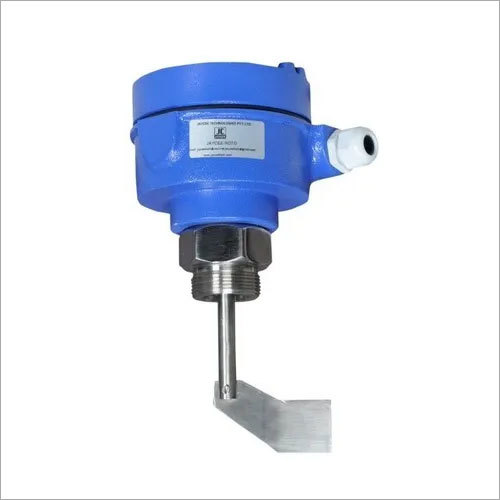
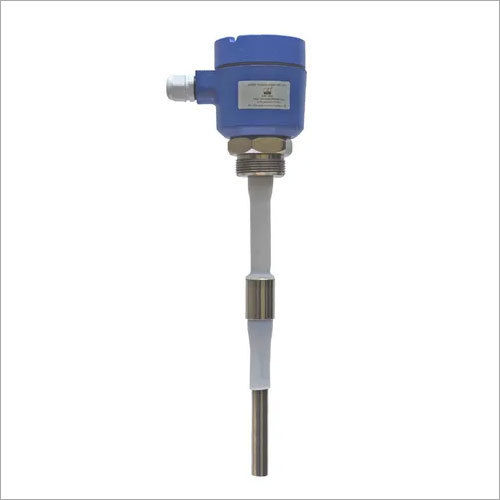
Relying on our R&D unit and technical expertise, we have been successful in carving a niche for ourselves as a prominent manufacturer & supplier of Vibrating Rod Point Level Switches. We source high grade quality components & materials from authentic vendors to manufacture these point level switches as per industrial standards. These switches are perfect for use in highly dusty environment and are known for their fast and easy installation. Vibrating Rod Point Level Switches are ideal for level sensing of solid granules, free flowing powders or liquids.
The salient features are as follow:
-
No Calibration.
-
No effect of electrical properties of the Service material.
-
High Reliability.
-
Field selectable operation logic.
-
Suitable for grain size upto 20 mm
-
Field selectable operation logic
-
Can be configured either for High or Low Level point switching.
Fork (Sensing Probe):
-
Mounting: Screwed 1 1/2 BSP (standard) Or Flanged (optional)
-
Sense: Fork, Stainless steel
-
Extension: Pipe
-
Length: 250 (standard) up to 3000 mm and as per application.
-
Operating Temp in (standard): 150o for the integral switching vessel unit, 200oC (on request
Technical Specifications (Standard):
Switching Unit:
-
Housing: Aluminum, weather proof, powder coated. Integral with The probe/ suitable for back panel mounting.
-
Cable entry: 2 nos.
-
Ambient temperature: 0oC to +60oC
-
Power consumption: 2 VA
-
Mains Voltage: 230/110 V AC (+/-15%), 50 Hz OR 18-55 V DC or 65 to 255 V AC.
-
Output: 2 sets of potential free c/o contacts rated at 5 amps, 230 V AC for non-inductive loads.
-
Switching delay: Continuously adjustable From 2 to 20 sec. probe Free or probe covered. (Optional)
-
Safety operation: Field selected switch over for min. or max. (FSL/FSH) switching points.
-
Switch status display: Green LED shows Normal, Red LED shows alarm.
Precision Level Detection for Bulk MaterialsThe vibrating rod point level switches utilize a fixed-position rod element, vibrating at approximately 350 Hz, to precisely detect the presence or absence of solids, granules, powders, or grains with medium density as low as 0.02 kg/L. Their reliable SPDT relay output and fast response time (<1 second) enable both overfill and empty detection in automated processes.
Robust Construction and Versatile Installation OptionsCrafted from high-grade stainless steel and protected with a polished finish, these switches are suitable for harsh environments. The enclosure material options and customizable process connections (G1 threaded or flanged) allow flexible installation. An IP65/IP67 rating ensures resistance to dust and water ingress, extending operational life beyond 1 million cycles.
Easy Sensitivity Adjustment and Wide-Ranging Power CompatibilityEach unit features externally adjustable sensitivity, making setup and calibration straightforward. The wide voltage range (18253V AC/DC) supports global power standards, while dual cable entries (2 x M20x1.5) simplify wiring. Explosion-proof versions are available for hazardous site requirements, further optimizing safety and reliability.
FAQs of Vibrating Rod Point Level Switches:
Q: How does a vibrating rod point level switch detect the presence of bulk materials?
A: A vibrating rod point level switch uses a rod that oscillates at around 350 Hz. When bulk solids, powders, or grains make contact with the rod, the vibration frequency changes, triggering the built-in relay to indicate material presence or absence.
Q: What application scenarios are suitable for these level switches?
A: These switches are ideal for level detection in silos, hoppers, and storage bins containing bulk solids, granules, powders, and grains, with medium densities greater than 0.02 kg/L. They are often used in industries such as food processing, cement, chemicals, and agriculture.
Q: When should I consider using the explosion-proof version?
A: An explosion-proof version is recommended for installations in hazardous environments where there is a risk of dust or gas ignition, such as in chemical plants, flour mills, or grain storage facilities. This option enhances site safety and meets regulatory requirements.
Q: Where can these level switches be mounted, and what are the installation options?
A: The switches can be mounted using a threaded G1 process connection or via custom flanged connections. They support a range of rod lengths (200 mm 2000 mm) and can be installed vertically or at an angle as required by the process vessel design.
Q: What is the process for adjusting the sensitivity of the device?
A: Sensitivity is externally adjustable, enabling users to fine-tune the detection level without dismantling the device. This allows for convenient on-site calibration to accommodate different bulk materials or environmental conditions.
Q: What benefits do these level switches provide in automated bulk material handling?
A: They ensure reliable, maintenance-free level indication, support fast response (<1 second), and are compatible with automatic control systems. Their robust build, wide temperature range, and long mechanical life ensure minimal downtime and increased process efficiency.


 Send Inquiry



 Send Inquiry
 Send Inquiry
 Send SMS
 Call Me Free


 English
 Spanish
 French
 German
 Italian
 Chinese (Simplified)
 Japanese
 Korean
 Arabic
 Portuguese