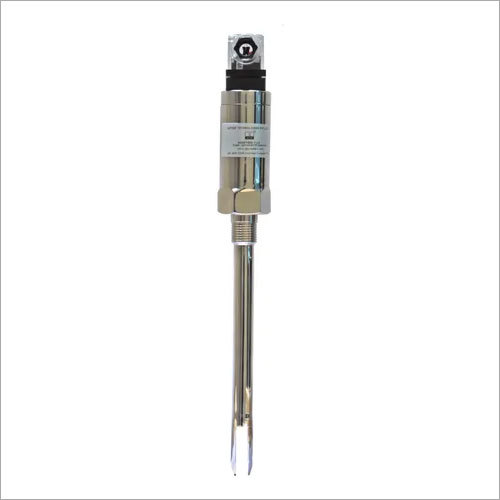
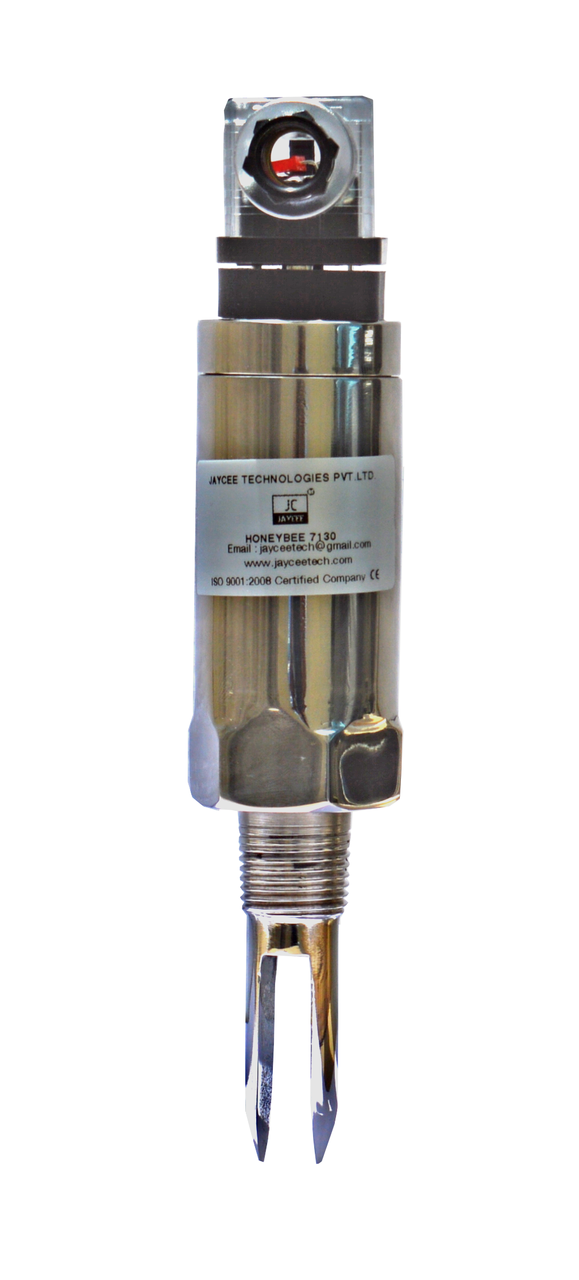
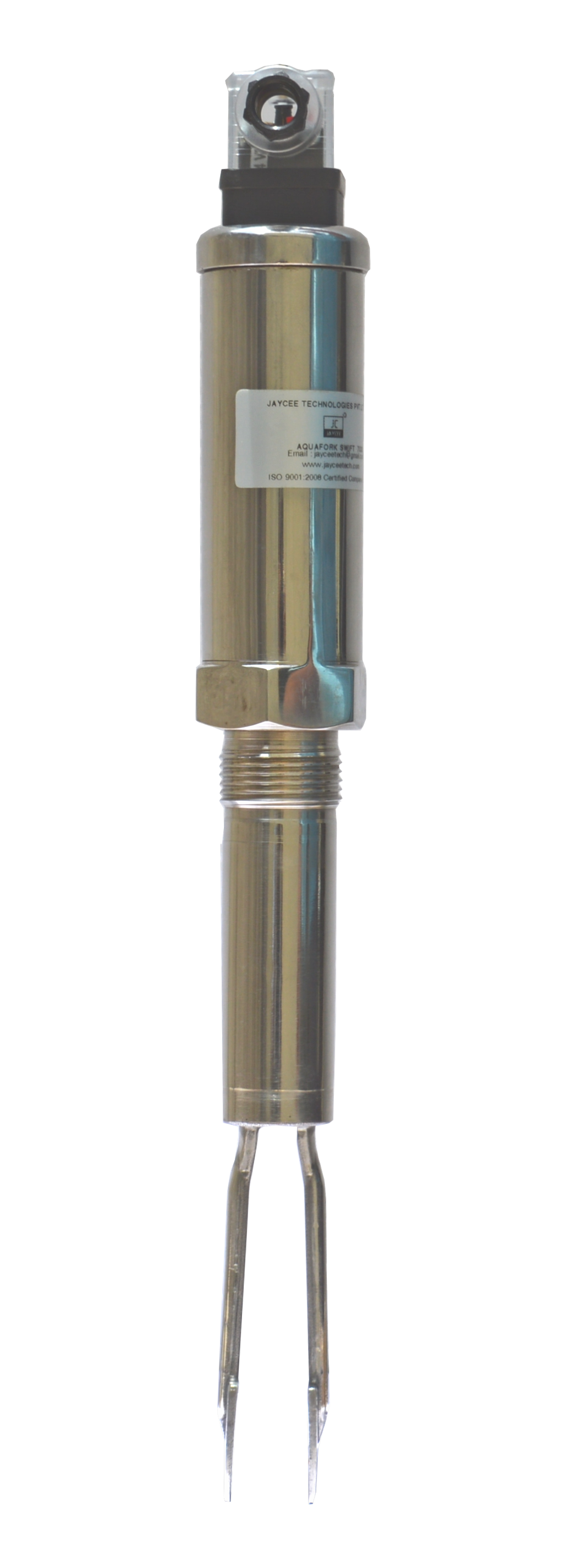
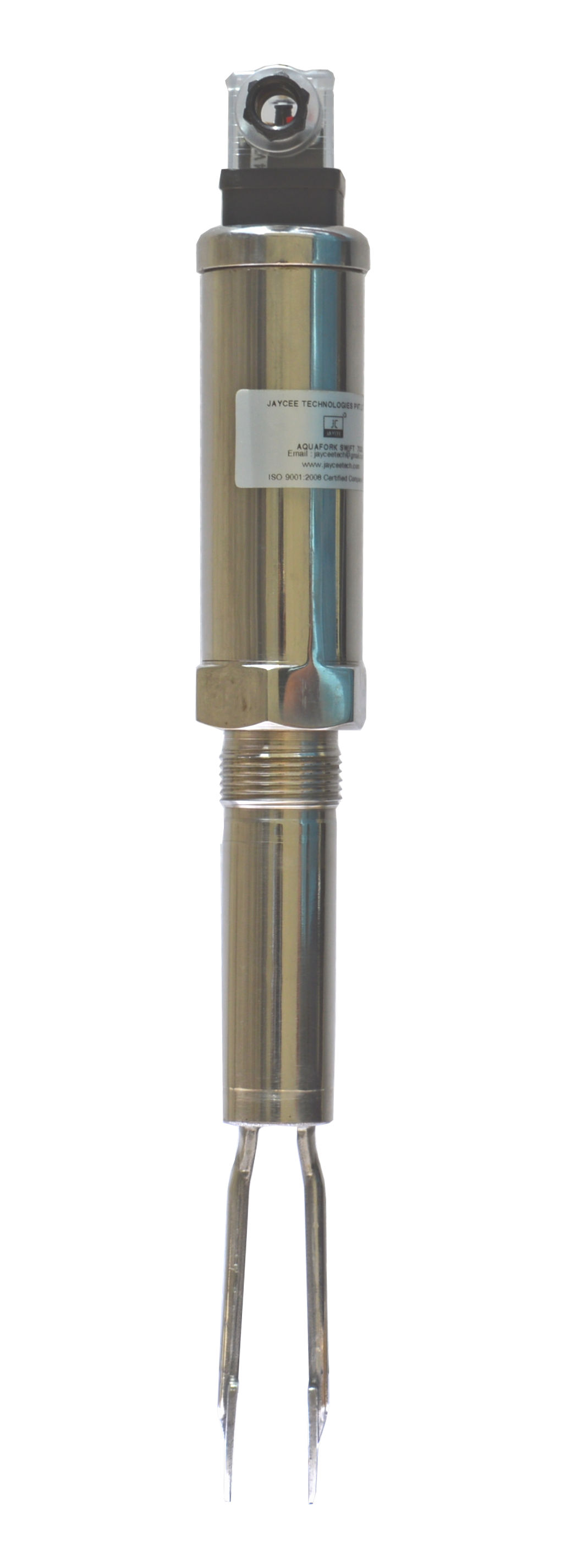
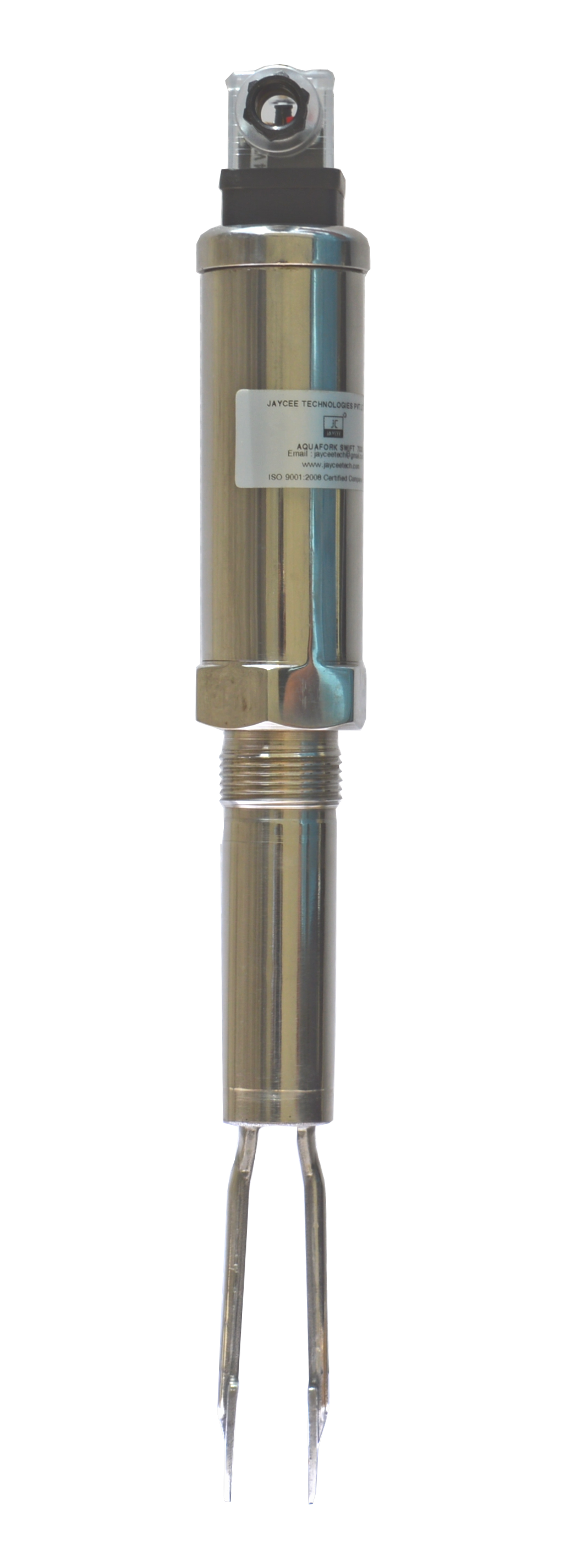
About Vibrating Fork Level Switch for Solid Application
Theelectronically Stimulated Fork Vibrates At Its Mechanicallyresonance Frequency Of About 400 Hz When The Fork Is Free Of Theservice Material. The Resonance Is Caused By The Piezoelectriccrystals. One Of The Piezo Crystals Produces A Small Voltage Which Istransmitted To The Switching Amplifier. If The Fork Is Covered By Thebulk Material, A Damping Effect Is Produced And The Piezo Crystaldoes Not Produce The Voltage And The Amplifier Will Switch And Acorresponding Signal Output Is Actuated. The Vibration Of The Forkhas Self-Cleaning Properties.
The light Deposit On The Container Wall Does Not Affect The Operation Ofthe Aqua fork
Applications:
Mostliquids With Max 10000 Mm2/S Viscosity. Corressive, Thick, Turbulent,Flowing Liguids.
Powdersand Light Granules With Min. Density 0.05 Kg/Dm3
Robust Detection for Bulk Solid ApplicationsThis vibrating fork level switch excels at detecting levels of granular and powdered materials in silos, hoppers, and process bins. Engineered to work under high pressure and varied temperature ranges, it delivers continuous, accurate monitoring, ensuring operational safety and efficiency in bulk material handling industries.
Flexible Installation and OperationWith customizable probe lengths, multiple mounting options (threaded or flanged), and universal power compatibility, this device is versatile enough for new installations or retrofits. The selectable fail-safe mode and rapid response time (<1 second) guarantee reliable performance tailored to process requirements.
FAQs of Vibrating Fork Level Switch for Solid Application:
Q: How does the vibrating fork level switch detect solid material levels?
A: It utilizes rapid vibration at approximately 350 Hz; when solids contact the fork, vibration is dampened, triggering the relay output (SPDT). This ensures accurate level detection for both granular and powdered materials.
Q: What installation options are available for this level switch?
A: The device supports both threaded (1-1/2" BSP/NPT) and flanged process connections, with standard probe lengths of 250mm and customizable sizes available on request. It mounts easily into silos, hoppers, or bins.
Q: When should I use the fail-safe mode, and how do I select it?
A: Fail-safe mode safeguards against malfunction by switching the relay on high or low-level detection failure. Selection can be made during device setup, tailoring response to either overfill or empty conditions as per process needs.
Q: Where is the vibrating fork level switch commonly used?
A: Its robust design makes it suitable for bulk solids storage and handling in food, cement, chemical, and pharmaceutical industries, especially where safe and reliable level monitoring is critical.
Q: What benefits does the vibration amplitude and rapid response provide?
A: The approx. 1 mm vibration amplitude and response time of under one second result in highly sensitive detection and minimal lag, supporting uninterrupted and safe operation within demanding environments.
Q: What is the maximum process pressure and operating temperature range supported?
A: This switch operates effectively up to 10 bar pressure and within a temperature range of -20C to +80C, allowing for deployment in challenging industrial zones.
Q: Is explosion-proof certification available for hazardous environments?
A: Yes, explosion-proof versions can be provided on request to ensure safe operation in potentially explosive atmospheres. Consult the supplier for details regarding compliant models.


 Send Inquiry


 Send Inquiry
 Send Inquiry
 Send SMS


 English
 Spanish
 French
 German
 Italian
 Chinese (Simplified)
 Japanese
 Korean
 Arabic
 Portuguese