About Capacitance Level Transmitters
Capacitance Level Transmitters
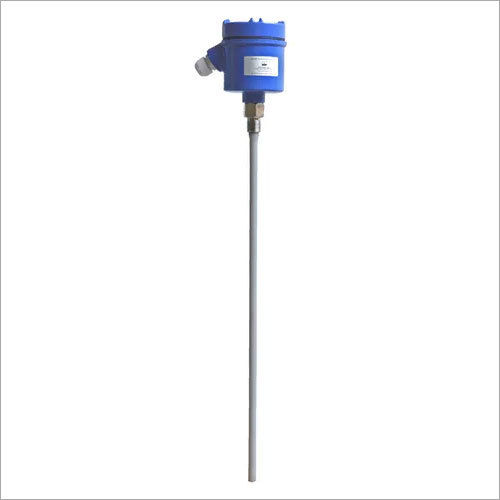
With the help of our dextrous team of professionals, our company has been able to mark its strong presence in the market as one of the well known manufacturers & suppliers of Capacitance Level Transmitters. Manufactured using quality metals and components, these transmitters are appreciated among our clients for their accuracy, compact design and perfect finish. Available in different specifications, Capacitance Level Transmitters are broadly used in oil and chemical industries to measure the level of different solids & liquids in storage vessels or tanks.
Further Details:
JAYCEE TRANCE Series is a compact, low cost, Loop Power level transmitter having 4-20 mA analogue out-put designed
These find their applications in the following areas:
Liquid Application:
-
Acids
-
Acetone
-
Amonia Benzine
-
Water
-
Diesel
-
Fruit juice
-
Milk
-
Wine
Solid Application:
Free Flowing Powder and small Grained material.
Probe Specification Chart:
Conductive material:
Non-Conductive material:
Advanced Digital Display TechnologyEquipped with a state-of-the-art digital display, these capacitance level transmitters provide clear, real-time readings, reducing human error and supporting rapid decision-making during industrial operations. The digital interface ensures users can monitor fluid levels with confidence and accuracy, helping prevent downtime and process interruptions.
Built to Withstand Industrial DemandsConstructed from high-grade stainless steel and finished in blue, these transmitters demonstrate corrosion resistance and structural integrity even in harsh settings. Their 220 VA power consumption and electric power supply promise steadfast performance, essential for continuous use in factories, chemical plants, or refineries.
Comprehensive Support from Exporter and ManufacturerSupplied by a reputable Indian exporter and manufacturer, customers benefit from complete product support, including installation guidance and servicing. This ensures an optimized experience whether you are installing new units or replacing existing equipment.
FAQs of Capacitance Level Transmitters:
Q: How does the capacitance level transmitter function in industrial environments?
A: The capacitance level transmitter uses the principle of varying capacitance between its probe and the container wall to detect the level of liquids or solids within industrial storage units. Its robust stainless steel construction and digital display enable it to deliver precise, real-time measurements even in challenging industrial settings.
Q: What benefits does the digital display provide compared to analog options?
A: A digital-only display ensures readings are accurate, clear, and easy to interpret, minimizing the chance of misreading data. This feature enhances operational efficiency and safety by providing instant feedback for quick decision-making during process control.
Q: When should I use this capacitance level transmitter in my facility?
A: These transmitters are ideal for continuous monitoring of fluid or bulk material levels in tanks, vessels, or silos. They are best used whenever accurate, real-time measurement is required to enhance process reliability and prevent overflow or underfill situations.
Q: Where is this equipment most commonly installed?
A: The capacitance level transmitter is typically installed in industrial environments such as chemical plants, water treatment facilities, food processing units, and manufacturing plantsessentially anywhere precise level monitoring of liquids or solids is necessary.
Q: What is the installation process for these transmitters?
A: Installation involves mounting the transmitter onto the tank or vessel, connecting it to a 220 VA electric power source, and calibrating the system via the digital interface. Support is provided by the supplier, ensuring proper configuration and integration into existing control systems.
Q: How can using this product improve my plant operations?
A: Using this transmitter can boost overall plant efficiency by providing reliable, continuous level data. This prevents costly spills or production halts, supports regulatory compliance, and reduces the need for manual measurement, thereby increasing workplace safety.


 Send Inquiry



 Send Inquiry
 Send Inquiry
 Send SMS


 English
 Spanish
 French
 German
 Italian
 Chinese (Simplified)
 Japanese
 Korean
 Arabic
 Portuguese